Petkovden in Bulgaria: Celebrating Saint Petka and Autumn Traditions
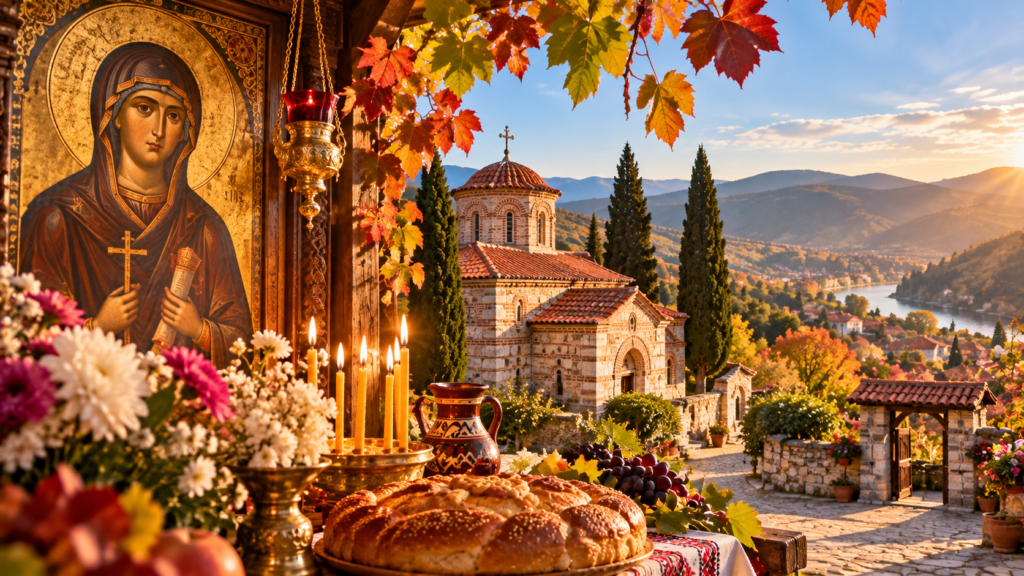
Every year on 14 October, Bulgaria celebrates Petkovden (Петковден), a traditional feast day dedicated to Saint Petka of Bulgaria, also known as Saint Paraskeva. Deeply rooted in Orthodox Christianity and Bulgarian folklore, the holiday marks an important moment in the autumn calendar and honours one of the most beloved female saints in the region.
For generations, Petkovden has connected faith, family, village life and the changing seasons.
Who Was Saint Petka?
Saint Petka, known in Bulgarian as Svetа Petka (Света Петка), is venerated throughout Bulgaria and the wider Orthodox Christian world.
Born in the 11th century in the region of Epivates, near Constantinople, she devoted her life to Christian faith and asceticism. According to tradition, she spent years in prayer and charitable devotion before her death.
Her relics were later transferred between several cities in the Balkans, including Tarnovo, the medieval capital of Bulgaria. Today, Saint Petka is honoured as a spiritual protector, and churches and chapels dedicated to her can be found throughout the country.
Petkovden in Bulgarian Folk Tradition
Petkovden has traditionally been associated with the arrival of autumn and the transition towards winter. In rural communities, the feast day marked a turning point in agricultural life, when much of the year’s harvest had been gathered and preparations for colder weather were under way.
The holiday is also connected with family celebrations, village gatherings and the observance of local customs. In some communities, people named Petka, Petko and related names celebrate their name day.
As with many Bulgarian traditions, customs vary from region to region, reflecting the country’s rich local heritage.
A Day of Faith, Family and Community
For Orthodox Christians, Petkovden is an occasion to attend church services, light candles and pray for health, protection and well-being.
Some villages hold communal celebrations and traditional gatherings, particularly where Saint Petka is the patron saint of the local church or settlement.
The day also highlights the importance of Bulgarian name-day traditions, when friends and relatives congratulate those celebrating their names. Name days remain an important part of social and family life in Bulgaria.
Autumn in Bulgaria
Petkovden arrives at a beautiful time of year, when the Bulgarian countryside takes on golden and copper colours. Vineyards, orchards and mountain forests reflect the changing season, while many communities continue to celebrate their local harvest traditions.
For visitors, learning about Petkovden offers a glimpse into the connection between Bulgarian Orthodox Christianity, folklore and everyday life.
From historic churches to village celebrations, the holiday shows how traditions continue to bring communities together across generations.
Keeping Bulgarian Traditions Alive
Petkovden is more than a date on the calendar. It is part of Bulgaria’s living cultural heritage, linking religious devotion with family customs and the rhythms of rural life.
As Bulgaria welcomes visitors interested in its history and traditions, celebrations such as Petkovden provide an opportunity to discover the country’s cultural identity beyond its famous beaches, mountains and ancient monuments.
Честит Петковден! Happy Petkovden to everyone celebrating!